






-
 Traditional Exam WorkflowThis traditional exam workflow illustrates how exam rooms have been set up for decades and highlights some areas of concern that can pose challenges to a health system when trying to improve the patient experience and outcomes.
- EMR Connectivity
- Real-Time Locating System
- Clinical Process Improvement
- Vital Signs
- Single Pane of Glass
- Americans with Disabilities
- Better Blood Pressure
- Infection Prevention
-
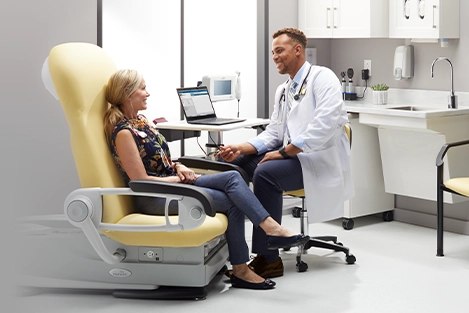
 Traditional WorkflowBringing the computer into the exam space enables the caregiver to remain in the room to retrieve information. Uninterrupted time with the patient is increased while the overall exam time is decreased. However, the computer should be positioned to allow patient access and ensure the caregiver and patient maintain eye contact.
 -
 Public/Private ZonesThe public zone includes side chairs to seat family/visitors as well as a dressing nook for patients. The private (or patient care) zone provides space for the initial patient interview including equipment, supplies and a work surface at the point of care. Overlap of these zones can lead to inefficiencies in the exam room workflow.
-
 EMR Connectivity
-
 Vital Signs
-
 Americans with Disabilities
-
 Infection Prevention
-
 Better Blood Pressure
-
 Real-Time Locating System
-
 Clinical Process Improvement
-
 Single Pane of Glass
Disconnected devices require manual entry of patient data.
Lack of visibility to real-time operations or patient self-rooming workflow inhibits waste reduction efforts.
Weight is captured outside of the exam space causing privacy concerns and bottlenecks.
Vital signs measurements are captured in multiple locations manually.
Disconnected equipment operates autonomously, increasing the likelihood of human error.
Inaccessible exam table poses patient and staff safety risks.
The non-adjustable exam table does not support proper patient positioning for accurate BP measurements.
Lack of patient self-rooming as well as capturing vital signs and weight in multiple locations increases the risk of exposure to contagions. Lack of RTLS makes contact tracing a tedious manual process. The exam table cannot be easily moved for cleaning and disinfecting.
Disconnected devices require manual entry of patient data.
Lack of visibility to real-time operations or patient self-rooming workflow inhibits waste reduction efforts.
Weight is captured outside of the exam space causing privacy concerns and bottlenecks.
Vital signs measurements are captured in multiple locations manually.
Disconnected equipment operates autonomously, increasing the likelihood of human error.
Inaccessible exam table poses patient and staff safety risks.
The non-adjustable exam table does not support proper patient positioning for accurate BP measurements.
Lack of patient self-rooming as well as capturing vital signs and weight in multiple locations increases the risk of exposure to contagions. Lack of RTLS makes contact tracing a tedious manual process. The exam table cannot be easily moved for cleaning and disinfecting.
Disconnected devices require manual entry of patient data.
Lack of visibility to real-time operations or patient self-rooming workflow inhibits waste reduction efforts.
Weight is captured outside of the exam space causing privacy concerns and bottlenecks.
Vital signs measurements are captured in multiple locations manually.
Disconnected equipment operates autonomously, increasing the likelihood of human error.
Inaccessible exam table poses patient and staff safety risks.
The non-adjustable exam table does not support proper patient positioning for accurate BP measurements.
Lack of patient self-rooming as well as capturing vital signs and weight in multiple locations increases the risk of exposure to contagions. Lack of RTLS makes contact tracing a tedious manual process. The exam table cannot be easily moved for cleaning and disinfecting.